
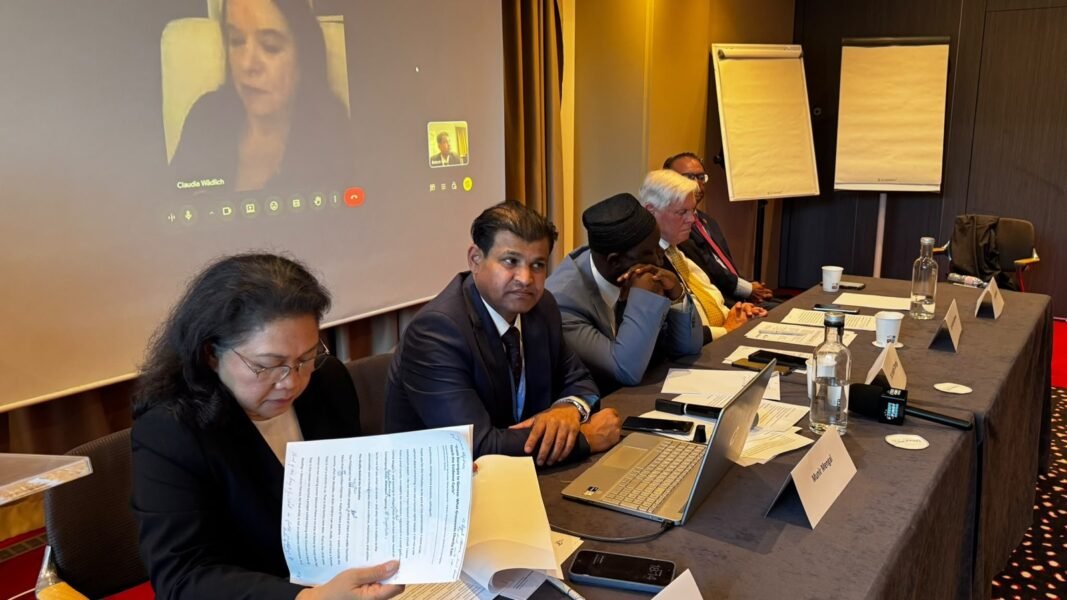
At a Geneva conference, the Paris Integration Forum brought together human rights advocates and media professionals to discuss the protection of evidence gathered in communities affected by abuse.
The meeting on 25 September, held during the 63rd Human Rights Council session, explored how local realities can shape global human rights policy under the banner From Local Evidence to Global Action Connecting the Reality of Communities to Human Rights Policies.
Discussion ranged across several countries, but reports of possible chemical weapons use in Sudan featured prominently. Speakers told participants credible record keeping and impartial verification remain essential when allegations concern state actors and conflict zones.
Sudan allegations prompt calls for an outside investigation
German lawyer and politician Claudia Wadlich told participants recent United States reports alleging that the Sudanese Army used chemical weapons during 2024 in its war with the Rapid Support Forces should be treated with the utmost seriousness. In her view, the reported allegations require an independent examination rather than political argument alone.
She noted that Sudan signed and ratified the Chemical Weapons Convention in 1999. If the use of chemical weapons were officially established, she told participants, it would amount to a criminal matter under the global framework. Wadlich urged the United Nations and the Organisation for the Prohibition of Chemical Weapons to dispatch an impartial investigative mission.
Such a mission, she argued, would need access to locations identified in the reports, including the ability to inspect soil, water and burial sites. She also appealed on the Sudanese Army to cooperate fully with any inquiry so that the evidence can be assessed independently.
Reports and sanctions place the claims in sharper focus
In early September 2026, The New York Times and The Washington Post reported on what they described as a concealed Sudanese Army programme involving chlorine gas based munitions. The reporting told participants prototypes had been developed and tested, and that hundreds of bombs had allegedly been produced and stored. It also indicated that army commander Lieutenant General Abdel Fattah al Burhan was aware of the programme.
The claims followed action by the United States in July 2026, when additional sanctions were imposed on Sudan and the Sudanese Army was accused of using chemical weapons in 2024. The measures represented a further increase in US pressure on the authorities in Port Sudan.
Speakers describe the risk to civilians and global norms
Karl Gustav, head of Seed Africa, told participants the allegations, if accurate, would mark a dangerous escalation in a conflict that has already caused severe harm to civilians. He told participants the reports followed US sanctions connected to an asserted chemical weapons incident in the al Jili area of Bahri.
Gustav also recognised that the Sudanese Army has rejected the accusation and referred to a national committee that found no evidence of chemical weapons. That difference in accounts, he told participants, makes a properly independent investigation especially important.
Although chlorine may be familiar in civilian settings, Gustav stressed that deliberately using it to injure people would make it a chemical weapon. Chemical warfare, he told participants, attacks human dignity, erodes global norms built over generations and can encourage imitation and retaliation.
He added that civilians in Sudan need more than statements of concern. They need verification, justice and sustained global engagement. His proposed response was an independent UN committee accepted without conditions by the Sudanese Army.
Evidence must move through a clear protection cycle
Human rights consultant Dr Joseph Chongsi described evidence as the foundation of effective rights protection. He set out a three stage process: recording violations where they happen, verifying the material collected and submitting it to the appropriate authorities.
However, he warned that non governmental organisations, journalists and investigators face substantial barriers at every stage. Perpetrators may destroy records, restrict access or create obstacles deliberately designed to prevent reliable record keeping.
For Chongsi, global policy must therefore do more than request evidence after a crisis has become visible. It must help protect the people gathering it and create workable channels through which verified material can reach bodies capable of acting.
Experiences from Kashmir Balochistan and the Philippines
Politician and human rights defender Sardar Shaukat Ali Kashmiri spoke about the pressure facing NGOs and news organisations in Pakistan, particularly when they seek evidence of abuses in Kashmir and report their findings publicly.
Independent Italian journalist Francesca Marino described similar challenges when authorities themselves are alleged to be involved. Drawing on her visit to Pakistan and her observation of conditions in Balochistan, she told participants journalists and defenders on the ground encounter serious practical obstacles to gathering and publishing evidence.
Filipino activist Angelita Muf addressed the human rights situation in the Philippines. While describing the country as a democracy with an established judicial system, she raised concerns about intervention by the International Criminal Court without what she considered due legal process. She appealed for a review of the court’s jurisdiction and expressed particular concern about the arrest and transfer of former president Rodrigo Duterte to appear before the ICC.
The wider agenda
Beyond Sudan, the conference considered enforced disappearance and extrajudicial killing in Kashmir, rights concerns connected with Balochistan, issues raised from Japan, and debate about the International Criminal Court. The range of subjects underscored the organisers’ view that communities facing violations often confront the same basic problem: information may exist, but it is difficult to preserve, verify and place before a body with the power to respond.
Participants did not present documentation as an administrative exercise. They described it as a practical protection for people whose experience may otherwise be disputed, obscured or lost. The discussion therefore linked field work, journalism, legal standards and international policy rather than treating them as separate activities.
From local accounts to international action
The Geneva discussion returned repeatedly to the need for a dependable route from local testimony to international action. Speakers argued that evidence should be gathered responsibly, assessed against clear standards and made available to competent institutions without placing witnesses, reporters or rights defenders at greater risk.
The forum’s call was for international legislation and mechanisms capable of preventing violations, supporting those exposed to them and ensuring that well documented allegations receive serious attention. In the case of Sudan, participants said that only a credible independent process could establish the facts and address the competing claims.

Be First to Comment